
Short answer: Both finishes protect steel nails with zinc. Hot-dip galvanized (HDG) nails have a much thicker zinc layer and are the usual choice for pressure treated timber, outdoor work and coastal sites. Electro-galvanized (EG) nails have a thin, bright zinc layer that costs less and suits interior work, short-term exposure and many asphalt shingle roofing jobs.
What is galvanizing?
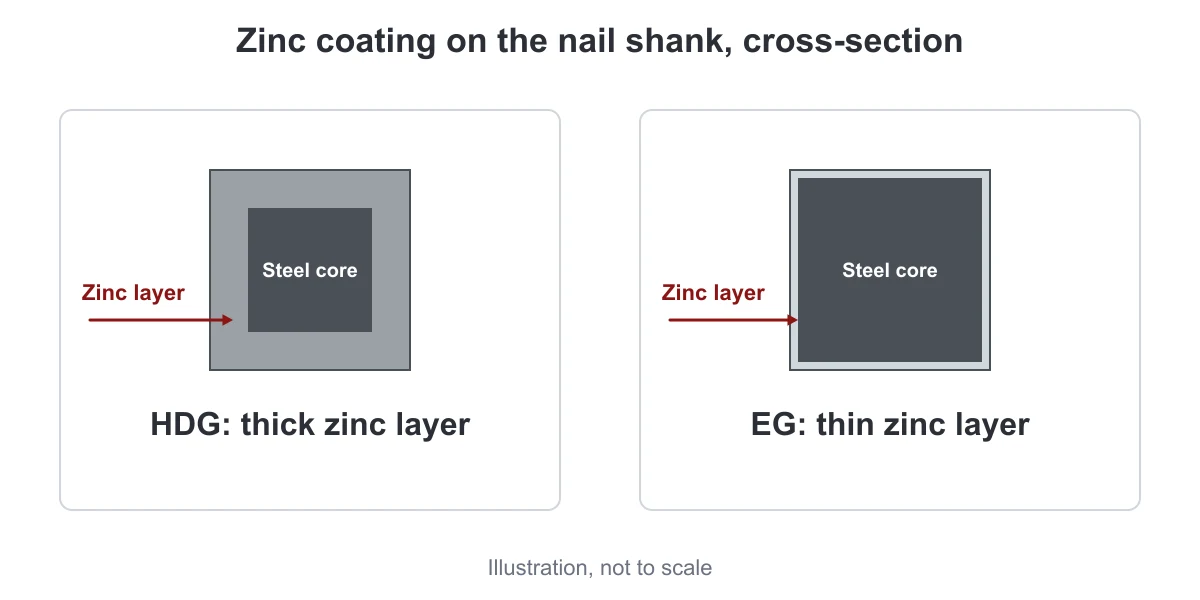
Galvanizing coats steel with zinc. The zinc protects the steel in two ways: it acts as a barrier, and it corrodes first so the steel underneath is protected. The thicker the zinc, the longer the protection usually lasts.
Hot-dip galvanized (HDG) nails
HDG nails are dipped in molten zinc after they are formed. This leaves a thick, slightly rough, matte grey coating.
- Much thicker zinc layer than EG
- Long-lasting protection outdoors
- Usual choice for pressure treated (PT) timber, decking, fencing and coastal or high-humidity sites
- Rougher surface can add some grip in the wood
Electro-galvanized (EG) nails
EG nails get their zinc coating by electroplating. The coating is thin, smooth and bright.
- Lower cost than HDG
- Clean, bright appearance
- Good rust protection in storage and for interior or short-term exposure
- Widely used for asphalt shingle roofing coils and general framing
Comparison table
| Hot-dip galvanized (HDG) | Electro-galvanized (EG) | |
|---|---|---|
| Zinc coating | Thick | Thin |
| Appearance | Matte grey, slightly rough | Bright, smooth |
| Outdoor life | Long | Shorter |
| Cost | Higher | Lower |
| Pressure treated timber | Recommended | Not recommended |
| Typical uses | Decking, fencing, treated timber, coastal sites, roofing | Interior work, framing, many shingle roofing jobs |
Pressure treated wood: why the finish matters
Modern wood preservatives contain copper, which can corrode plain or thinly coated steel faster. For that reason, many building codes call for hot-dip galvanized (or stainless steel) fasteners in pressure treated lumber. In the USA, codes commonly reference ASTM A153 for hot-dip zinc coatings on fasteners. Always check the code that applies to your project and the preservative manufacturer's guidance.
Which finish should you choose?
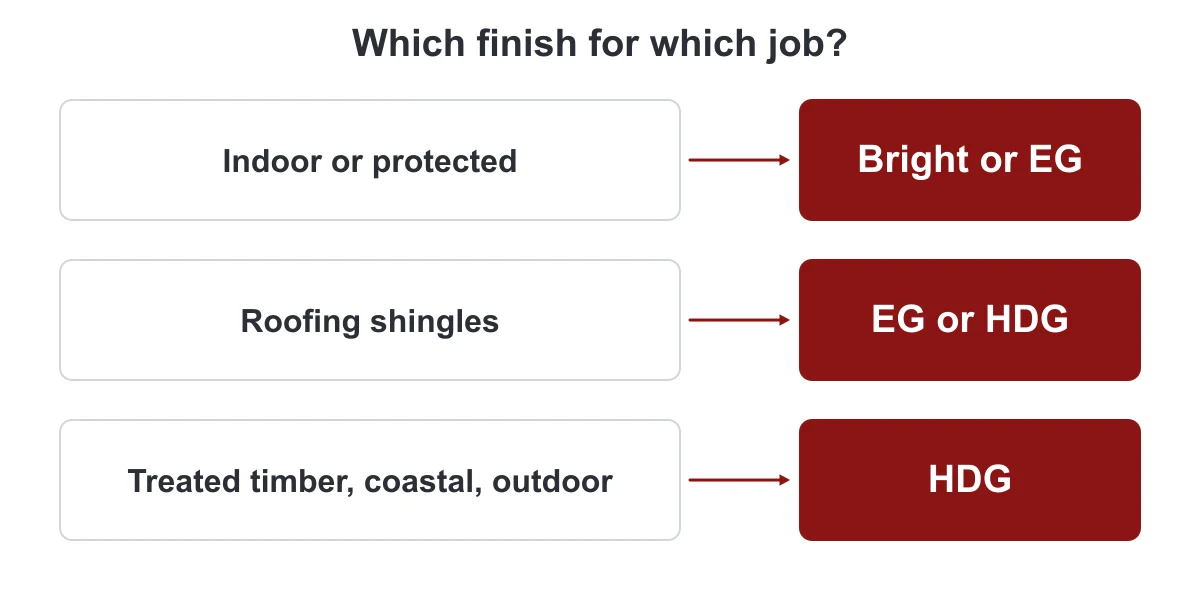
- Interior framing and protected work: bright or EG
- Asphalt shingle roofing: EG is common; HDG for coastal and high-wind areas or where required
- Pressure treated timber, decking, fencing:HDG
- Coastal or high-humidity sites: HDG, or stainless steel for severe exposure
- Pallets for indoor use:bright or EG is often enough
Pavandeal Homecare Pvt Ltd supplies smooth, ring and screw shank coil nails in bright, EG and HDG finishes. If your order needs a coating test, a recognised third-party laboratory can test the goods after production and the report can be provided with your order.
FAQ
Can I use EG nails outdoors?
For short-term or protected exposure, yes. For long-term outdoor, treated timber or coastal use, choose HDG.
Are HDG nails required for pressure treated wood?
Many building codes require HDG or stainless fasteners for treated lumber. Check your local code.
Is HDG more expensive than EG?
Usually yes, because the coating is much thicker. Ask for both prices if you are unsure.
Do you supply both finishes?
Yes. Pavandeal Homecare Pvt Ltd manufactures coil nails in both HDG and EG and can quote them side by side.